DeepSeek AI Detector: Can You Tell if DeepSeek Wrote a Text?
Is there a DeepSeek AI detector? What Turnitin covers, why DeepSeek's open models make labels unreliable, India context, and how to check a text fairly.
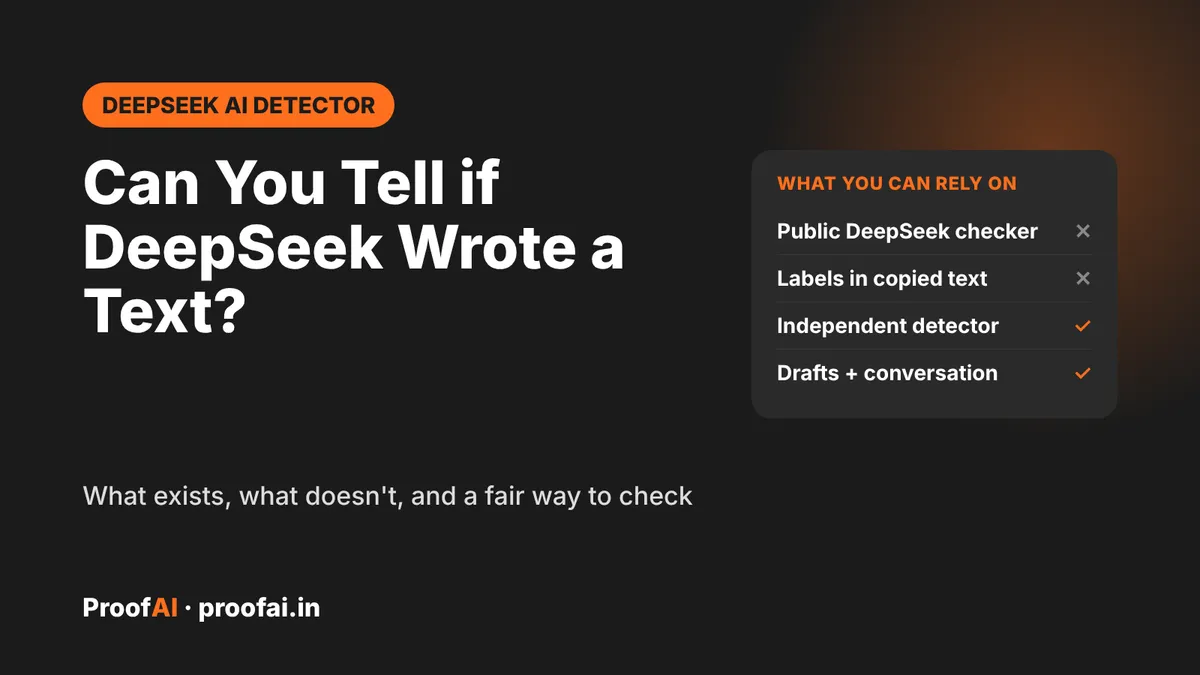
Short answer: there is no public checker you can paste a text into to confirm that DeepSeek wrote it. China's labelling rules ask AI services to mark their output, but DeepSeek's models are also released openly, so anyone can run them outside DeepSeek's app. Turnitin lists DeepSeek V3.2 among the models its English detector covers (Turnitin). For everyone else, an independent tool such as ProofAI's AI text detector is a practical first step, read together with drafts and a conversation with the writer.
This guide covers what is known about detecting DeepSeek text, why it matters in India, and how teachers, offices and students can handle it fairly.
Try it: use ProofAI's AI checker tool, free for 10 checks a day with no login.
Why DeepSeek matters in India
DeepSeek's assistant rose to the top of Apple's App Store on 26 January 2025 and held the top global spot in downloads, with India contributing 15.6% of all downloads across platforms since launch, according to Appfigures data reported by Bloomberg (Gulf News / Bloomberg). That makes DeepSeek one of the AI tools Indian teachers and employers are most likely to meet after ChatGPT.
Government offices have been cautious. Reuters reported that India's finance ministry asked its employees to avoid AI tools such as ChatGPT and DeepSeek for official purposes, citing risks to the confidentiality of government data and documents, in an advisory dated 29 January 2025 (Deccan Herald). The same Reuters report noted that Australia and Italy had placed similar restrictions on DeepSeek over data security (The Kathmandu Post / Reuters).
That advisory is about data leaving the office, not about detecting AI text. But it is a useful reminder for any organisation: decide which AI tools are allowed, for what, and say so clearly before you start checking documents.
Is there an official DeepSeek AI detector?
Not a public one for text. Two facts explain why.
Want to check your own content? Try ProofAI free 10 checks a day, no login needed.
China requires AI labels. China's Measures for Labeling AI-Generated Content took effect on 1 September 2025. They require explicit labels people can see, such as a notice placed in generated text, and implicit labels in metadata, such as the provider's name and a content ID (Covington Inside Privacy). Caixin reported that DeepSeek was among the platforms that announced steps to comply (Caixin Global). A label shown in a chat app, however, is not something a teacher can verify once text has been copied into an essay or a Word file.
DeepSeek's models are open. DeepSeek publishes its R1 model weights under the MIT licence, allowing commercial use, modification and derivative works (Hugging Face), and its V3 series also supports commercial use under its model licence (GitHub). Anyone with the hardware can run these models on their own servers or inside other apps, outside DeepSeek's own service. So "DeepSeek text" may come from many places, not one company's app.
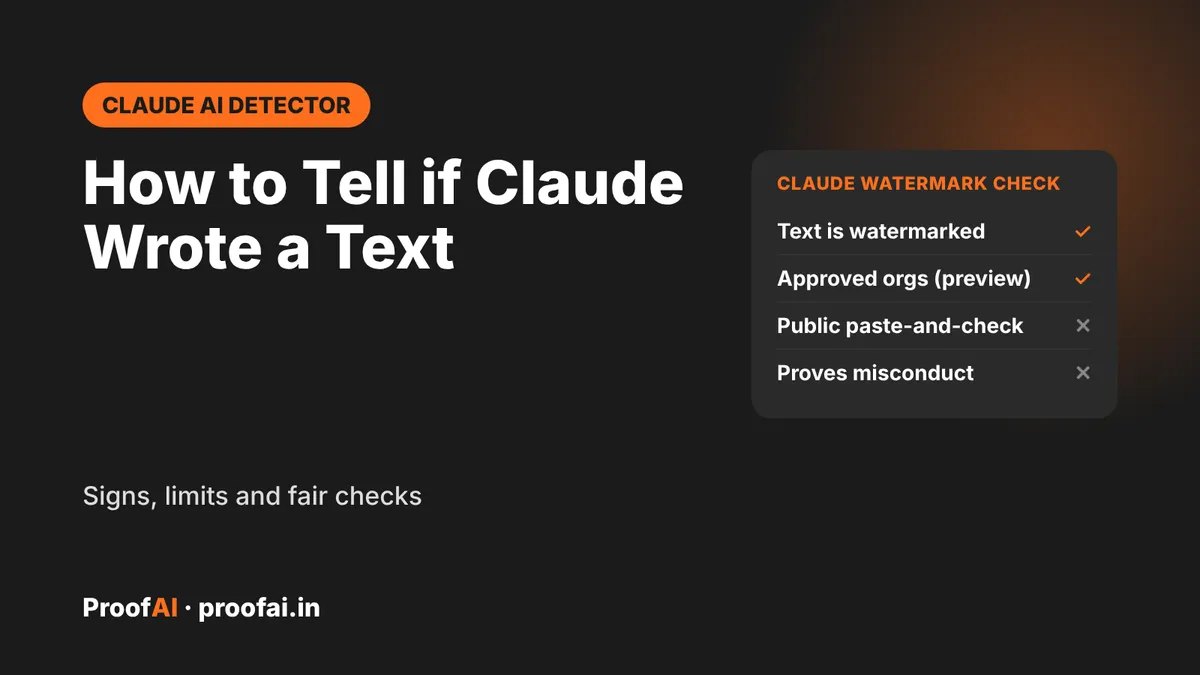
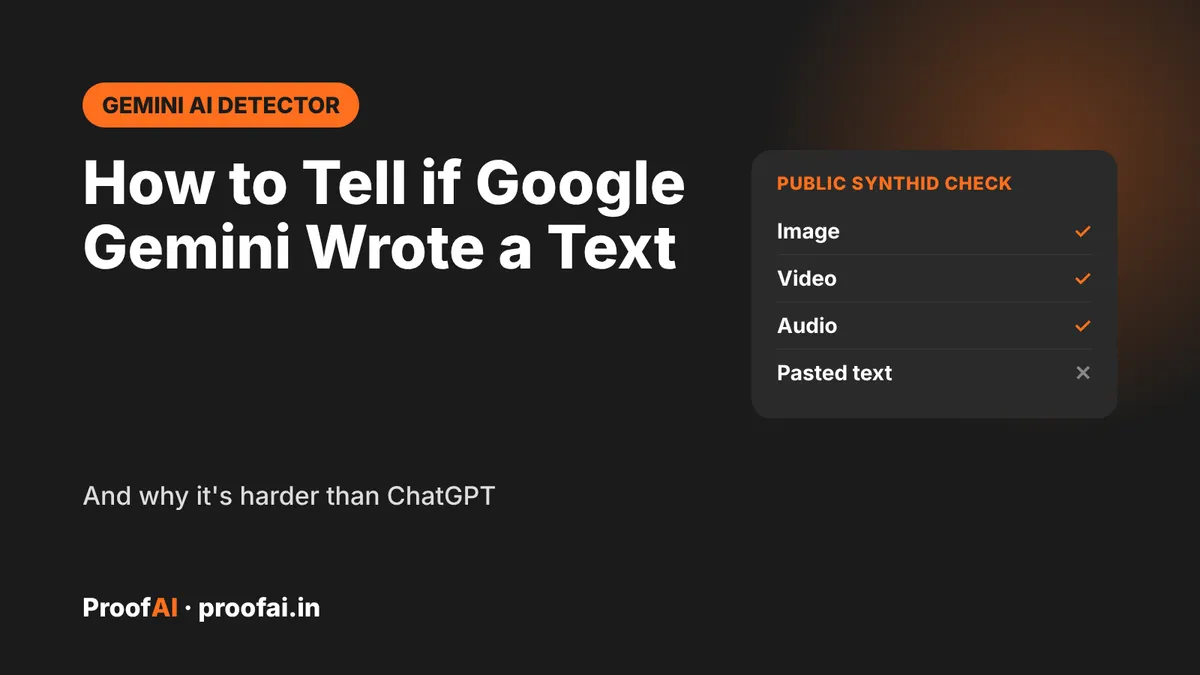
This is different from Google, which watermarks Gemini text with SynthID, and Anthropic, which says future Claude models will carry a watermark. As our guides on Gemini and Claude explain, even those watermarks can only be checked by the company or approved organisations.
Can Turnitin detect DeepSeek?
Turnitin's AI writing FAQ lists DeepSeek V3.2 among the models its English detection model can detect, alongside GPT, Gemini, Claude and Llama models (Turnitin). It does not name the R1 reasoning model, so check the current list rather than assuming every DeepSeek version is covered.
Two points from the same FAQ matter for Indian classrooms (Turnitin):
Also read: AI Detector vs Plagiarism Checker: What's the Difference?
- Language. AI writing detection works for long-form English, Spanish, Japanese, Modern Arabic, Dutch, German and Turkish. A paper in an unsupported language, such as Hindi or another Indian language, is not processed and gets no AI report.
- Length. An English submission needs at least 300 words of prose to receive an AI score, and Turnitin says the score should not be used as the sole basis for action (Turnitin).
If your institution uses Turnitin, our guide to Turnitin's AI score explains how to read the report, and Can Turnitin detect AI in a PDF? covers file submissions.
What DeepSeek text looks like, and why style is weak evidence
DeepSeek's chatbot writes in the same broad style as other large models: fluent, organised, often with headings and a summary. DeepSeek itself described an early research version, R1-Zero, as struggling with endless repetition, poor readability and language mixing, which it says the released R1 model was built to address (Hugging Face). The lesson for reviewers: style changes from version to version, so a list of "DeepSeek phrases" will not hold up.
Style is also unfair evidence for many Indian writers. A Stanford study found that seven AI detectors classified more than half of TOEFL essays written by non-native English students (61.22%) as AI-generated, while being near-perfect on essays by US-born eighth-graders (Stanford HAI). Simple vocabulary and textbook sentence patterns are common in honest work by students writing in a second language.
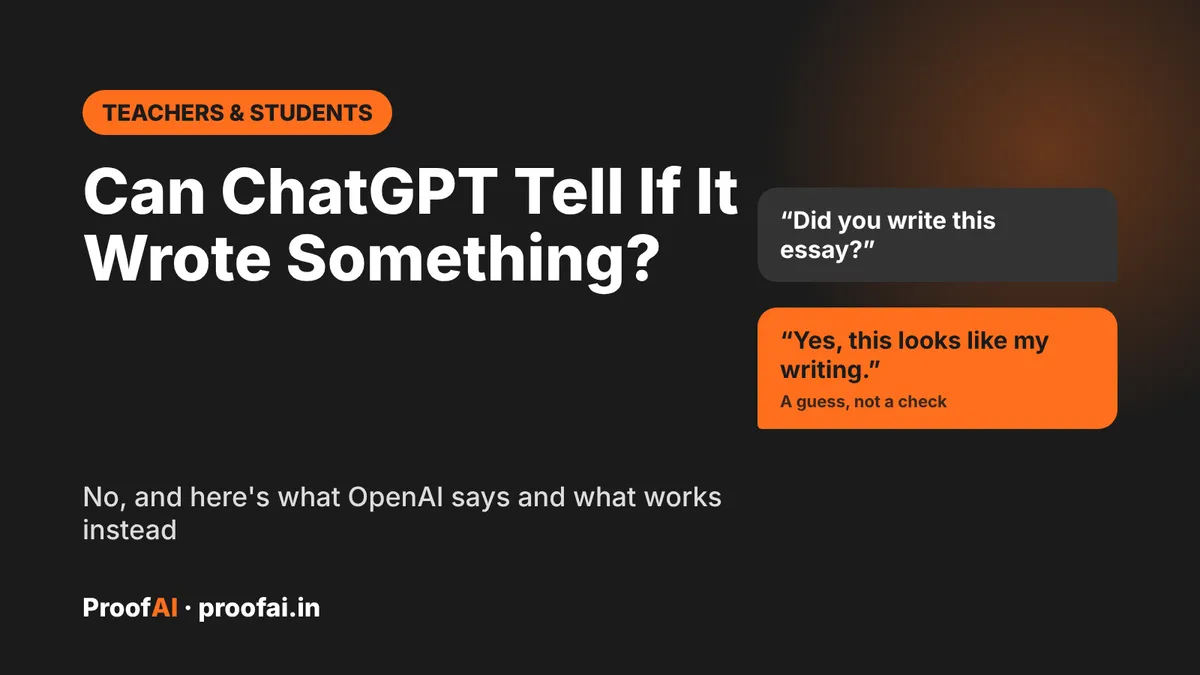
Asking DeepSeek "did you write this?" does not help either. As we explain in Can ChatGPT tell if it wrote something?, a chatbot predicts a plausible reply; it does not look up a record of what it wrote for other people.
Checking a text with ProofAI
ProofAI's AI text detector is designed to detect text from widely used AI models. It does not depend on a label or watermark: it scores the statistical patterns of the writing and highlights the passages that look most AI-written, so you can judge them yourself. For assignments and reports that arrive as files, the PDF and Word checker works on the document directly.
Treat the result as one signal. Short, formulaic or heavily edited text is hard for any detector, and a mixed draft (part human, part AI) rarely gives a clean answer.
How to check a text you suspect came from DeepSeek: what exists and a fair checking process
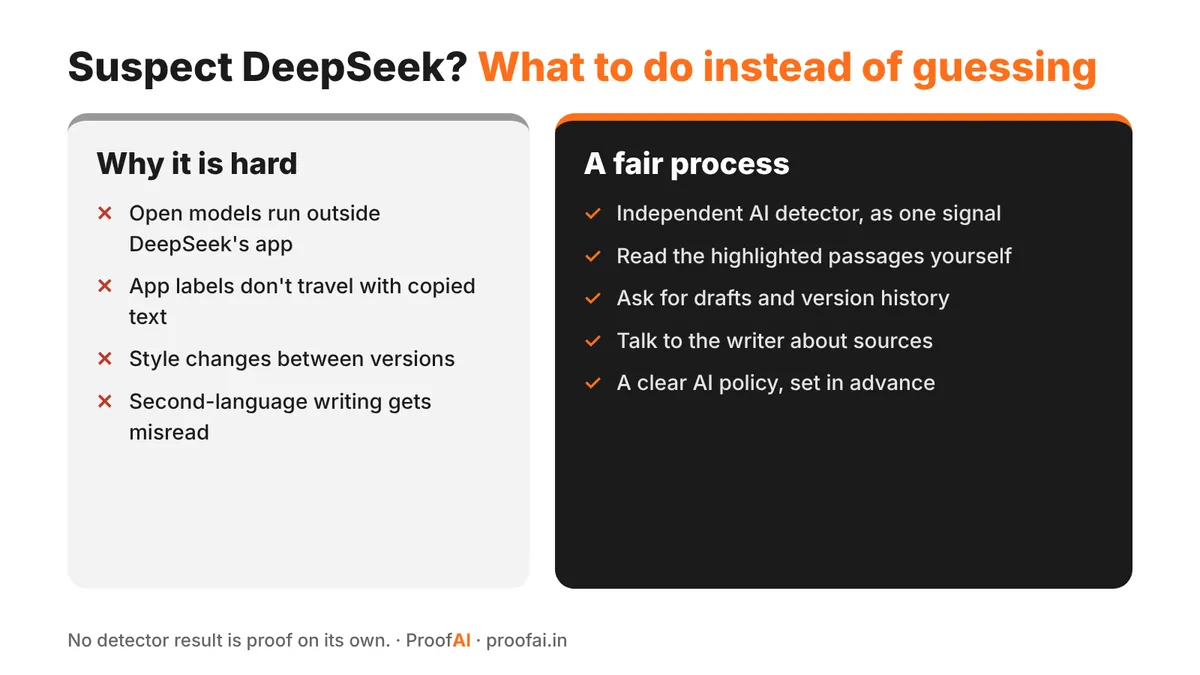
A fair checking process
For teachers and examiners
- Run the text through an independent detector and read the highlighted passages.
- Ask for drafts, notes and version history, or a short handwritten or oral explanation of the main argument.
- Talk to the student about their sources and choices before drawing any conclusion.
- Compare with earlier work, keeping in mind that writing in a second language changes over a term.
- Follow your institution's AI policy and record what you checked.
For offices and HR teams
- Publish a clear AI policy that says which tools are allowed for which work, in line with any government or client advisories you follow.
- Do not paste confidential documents into any online tool, including AI checkers, unless your data policy allows it.
- Judge work on accuracy and sources, and use a detector result only to start a conversation.
For students
- Keep your drafts and save your AI chats if your course allowed AI help.
- Check your own text with the AI text detector and replace generic passages with your own examples.
- Disclose AI use where you are asked to.
FAQ
Is there a DeepSeek AI detector? There is no public tool that confirms DeepSeek wrote a text. Independent detectors such as ProofAI's AI text detector look for the patterns of AI writing in general and give a probability, not proof.
Can Turnitin detect DeepSeek? Turnitin lists DeepSeek V3.2 among the models its English AI writing detection covers (Turnitin). Its score is meant to inform a decision, not to make one.
Does DeepSeek add a watermark to its text? China's rules require AI services to label generated content with visible notices and metadata (Covington Inside Privacy). There is no public way for a reader to verify such a label in copied text, and DeepSeek's open models can be run outside its app.
Is DeepSeek banned in India? The best-known advisory was internal: Reuters reported in February 2025 that India's finance ministry asked its employees to avoid AI tools such as ChatGPT and DeepSeek on office computers and devices, and said it could not confirm whether other ministries had issued similar directives (The Kathmandu Post / Reuters). Check your own organisation's policy.
What if I am wrongly accused of using DeepSeek? Share your drafts, notes and version history, offer to explain your work, and ask what the concern is based on. A detector score or a chatbot's answer is not proof on its own.
Conclusion
DeepSeek is widely used in India, but there is no public button that proves a text came from it. Turnitin covers a named DeepSeek model, and independent detectors such as ProofAI give a useful first signal. A fair decision still rests on drafts, a conversation with the writer and a clear AI policy.
Published by
AI tools may assist with drafting; a team member checks and approves every article before it is published. How we write and correct articles.
Popular AI detection tools
Ready to Verify Your Content?
Get weekly insights on AI detection. Start your journey toward digital authenticity with our AI detection tools.